Secure File Sharing for Financial Services
Secure file sharing for financial services is essential when organizations need to send large financial files securely. Financial institutions handle audit reports, tax documents, transaction records, and client portfolios every day.
These files are often too large for email or a standard email address attachment. They also require strong data protection and security measures to prevent unauthorized access and data breaches.
A reliable file sharing service helps manage file transfers securely while ensuring compliance with financial regulations. You can send large financial files securely with Filemail.
The Problem with Sending Large Financial Files
Email was not designed for secure file sharing in financial services.
Most providers limit attachments to 20–25 MB. Large financial files often exceed hundreds of megabytes. This causes failed delivery and delays in workflows involving file uploads.
Email also lacks strong security measures because it does not provide consistent end-to-end encryption, messages are stored on multiple servers, and accounts are vulnerable to phishing and credential theft. You can learn more about Why Email Is Not Secure for sending large files. Sensitive documents can be intercepted during transfer or exposed through compromised accounts, and files can be easily forwarded without control, increasing the risk of data breaches.
Compliance is another major concern. Regulations such as GDPR and FINRA require strict data protection, security and compliance controls, and auditability. Email does not meet these standards.
There is also no way to manage file access after sending. Once a file is shared, you cannot control who can access the file, revoke permissions, or monitor usage.
Secure File Transfer Methods for Financial Services
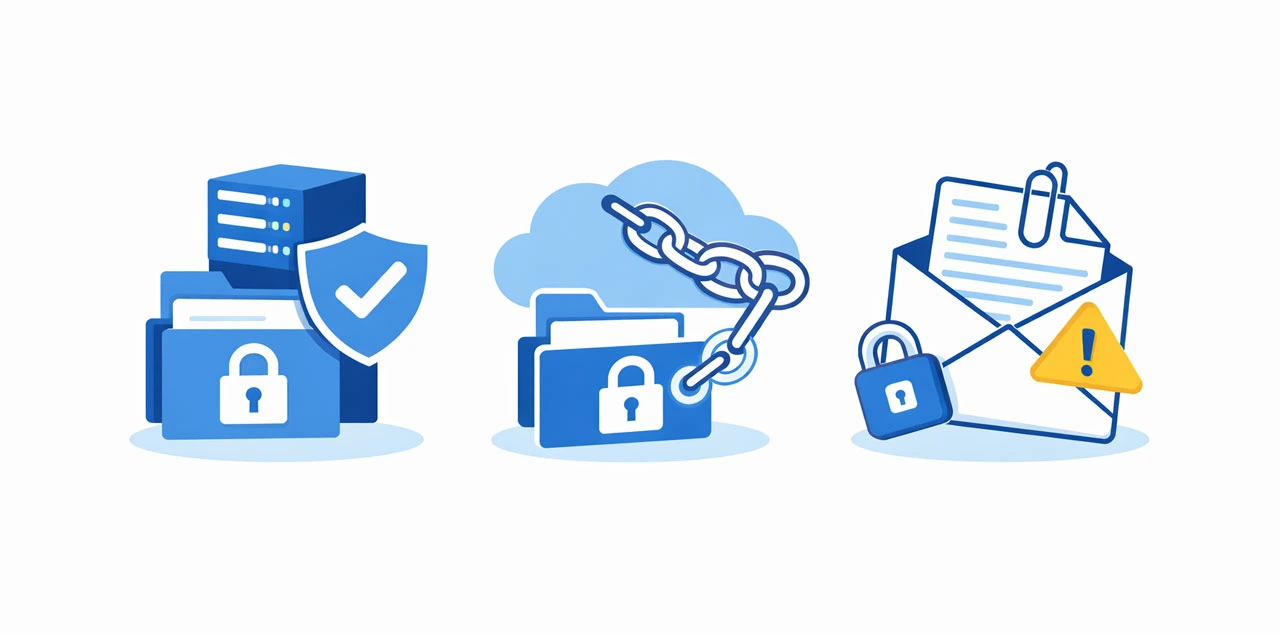
There are three main ways to send large financial files. Each method offers different levels of security, control, and compliance.
1. Secure File Transfer Services (Recommended)
Secure file transfer services are built specifically for handling large file uploads and sensitive data.
They use encryption protocols such as TLS during transfer and encryption at rest to ensure data protection. These platforms also include security measures such as password protection, restricted access, and detailed tracking.
They allow you to manage file access, control permissions, and monitor who downloads or views each file.
This is the most reliable method for secure file sharing for financial services. You can learn more about secure file transfer.
2. Cloud-Based Storage Links
Cloud-based file sharing platforms allow users to share files through links.
While convenient, security depends heavily on configuration. Misconfigured permissions can allow unauthorized users to access the file.
Common risks include public link exposure, incorrect access settings, and lack of advanced security and compliance controls.
Cloud-based tools are better suited for internal collaboration than for sending sensitive financial data externally.
3. Email Attachments
Email attachments are the least secure option.
They have strict file size limits, do not support large file uploads efficiently, and lack proper encryption controls. Files can be forwarded without restriction, making it difficult to manage file distribution.
This significantly increases the risk of data breaches and unauthorized access to sensitive documents.
How to Send Large Financial Files Securely
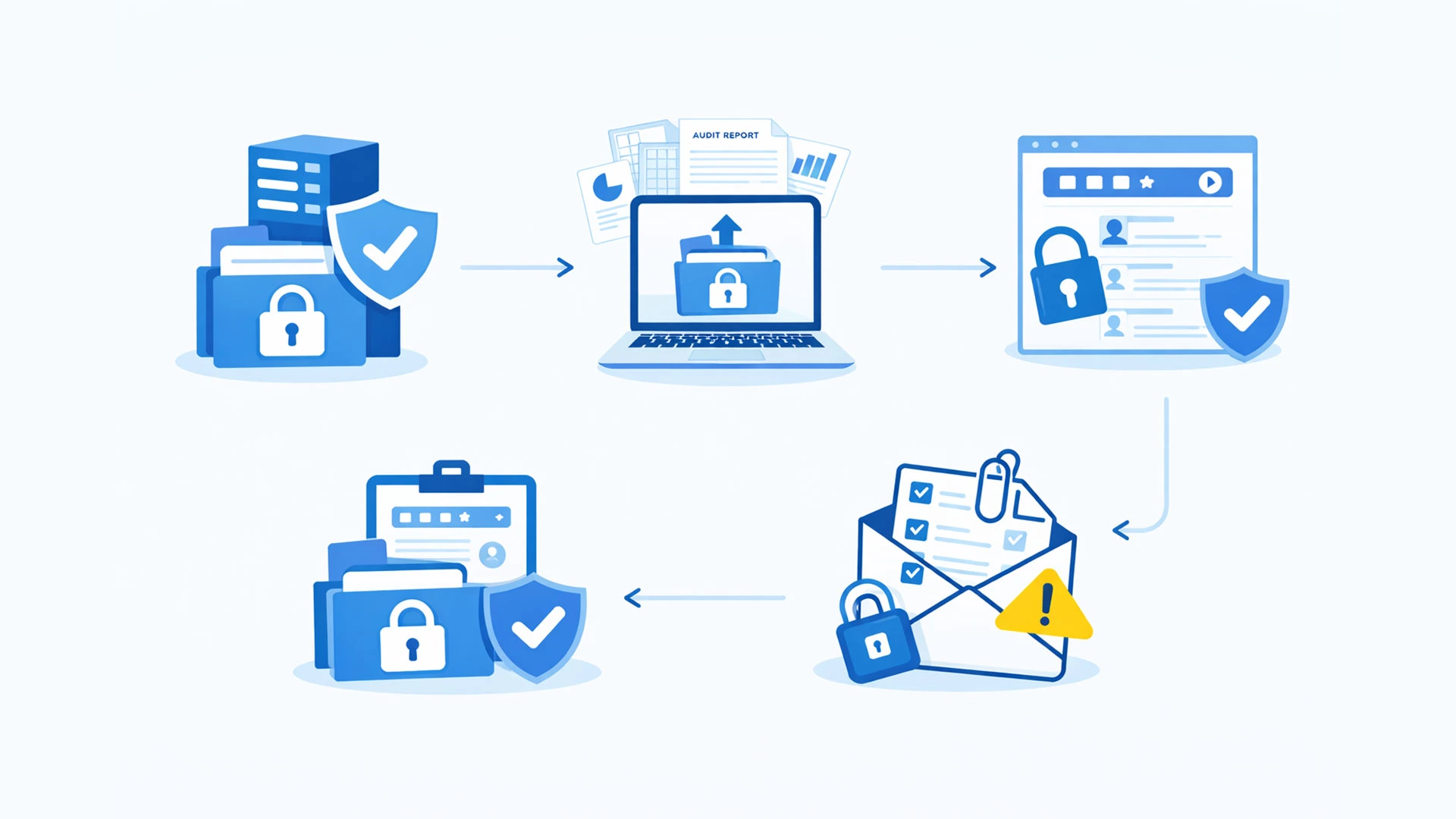
Step 1: Choose a secure file sharing service
Use a secure file sharing service designed for financial data, with strong security measures and compliance features.
Step 2: Upload your files
Upload large financial files securely using a platform that supports large file uploads and multiple file types without compression. You can upload files directly here.
Step 3: Apply security controls
Enable password protection, set expiration dates, and restrict access to specific recipients to protect sensitive documents.
Step 4: Share the file securely
Send a secure link instead of attaching files to an email address.
Step 5: Monitor and manage file activity
Track downloads and manage file permissions to ensure only authorized users can access the file.
The safest approach is to use a secure, cloud-based file sharing service with strong encryption, access control, and tracking capabilities.
Use Cases for Secure Financial File Sharing
Secure file sharing plays a key role across financial operations.
Audit firms exchange audit reports and supporting documents that must remain confidential and tamper-proof.
Banks share regulatory documents and internal reports that require strict security and compliance controls.
Accounting firms send tax documents, payroll data, and invoices. These sensitive documents must be protected and properly managed. This is especially important for secure file sharing for accountants and financial services.
Investment firms transfer portfolio data and client reports that contain highly sensitive financial information.
Insurance companies share claims data and policy documents with partners and clients.
Fintech companies handle transaction logs, system data, and user records that require secure file uploads and controlled access.
You can improve workflows by using secure file sharing tools.
Pros and Cons of File Sharing Methods
Secure File Transfer Services
Pros | Cons |
| 1. Strong end-to-end encryption for highly secure data transfers | 1. Often requires a paid subscription to access full security features |
| 2. No file size limits, ideal for large and sensitive financial files | 2. Requires a stable and reasonably fast internet connection |
| 3. Advanced access controls (password protection, expiry dates, permissions) | 3. May involve some initial setup or basic user training |
| 4. Detailed tracking and audit logs to support compliance requirements | |
| 5. Supports a wide range of file types and large datasets |
Cloud-Based Storage
Pros | Cons |
| 1. Easy collaboration with internal teams and external clients | 1. Risk of misconfigured access settings leading to data exposure |
| 2. Accessible across multiple devices and locations | 2 Limited advanced security controls compared to secure transfer solutions |
| 3. Generally user-friendly with familiar interfaces | 3. Shared links can be forwarded or accessed by unintended users |
| 4. Supports file syncing and version control in many cases | 4. Less suitable for highly sensitive financial data |
Email Attachments
Pros | Cons |
| 1. Simple and widely used with no additional tools required | 1. Strict file size limits (typically 20–25MB) |
| 2. Free with most email providers | 2. Weak security with no guaranteed encryption or protection |
| 3. Familiar workflow that requires no training | 3. No control over file access after sending |
| 4. Convenient for quickly sending small, non-sensitive files | 4. No tracking, monitoring, or audit capabilities |
| 5. High risk of data breaches or misdelivery |

Why Filemail Is a Secure File Sharing Solution for Financial Services
Filemail is designed for secure file sharing where both file size and security matter.
You can send large files without worrying about file size limits or file type restrictions.
Filemail provides a secure, cloud-based file sharing service with strong data protection, encryption, and access control features. You can view Filemail pricing and plans.
It allows you to manage file transfers efficiently, track downloads, and ensure only authorized users can access the file.
Key features include end-to-end encryption, password protection, expiring links, and fast transfer speeds.
Frequently Asked Questions
Is email secure for financial file sharing?
No. Email does not provide sufficient data protection or security measures for sensitive financial documents.
What is the safest way to send large financial files securely?
Use a secure file sharing service with encryption, access control, and compliance features.
Can I send large files without compression?
Yes. Secure file sharing services support large file uploads without reducing file quality.
Why do large financial files fail over email?
They exceed file size limits and are not optimized for large file uploads.
Final Thoughts
Secure file sharing for financial services requires strong data protection, proper security measures, and full control over file access.
Email cannot meet modern security and compliance requirements.
A secure, cloud-based file sharing service provides a reliable way to manage file transfers, protect sensitive documents, and prevent data breaches.